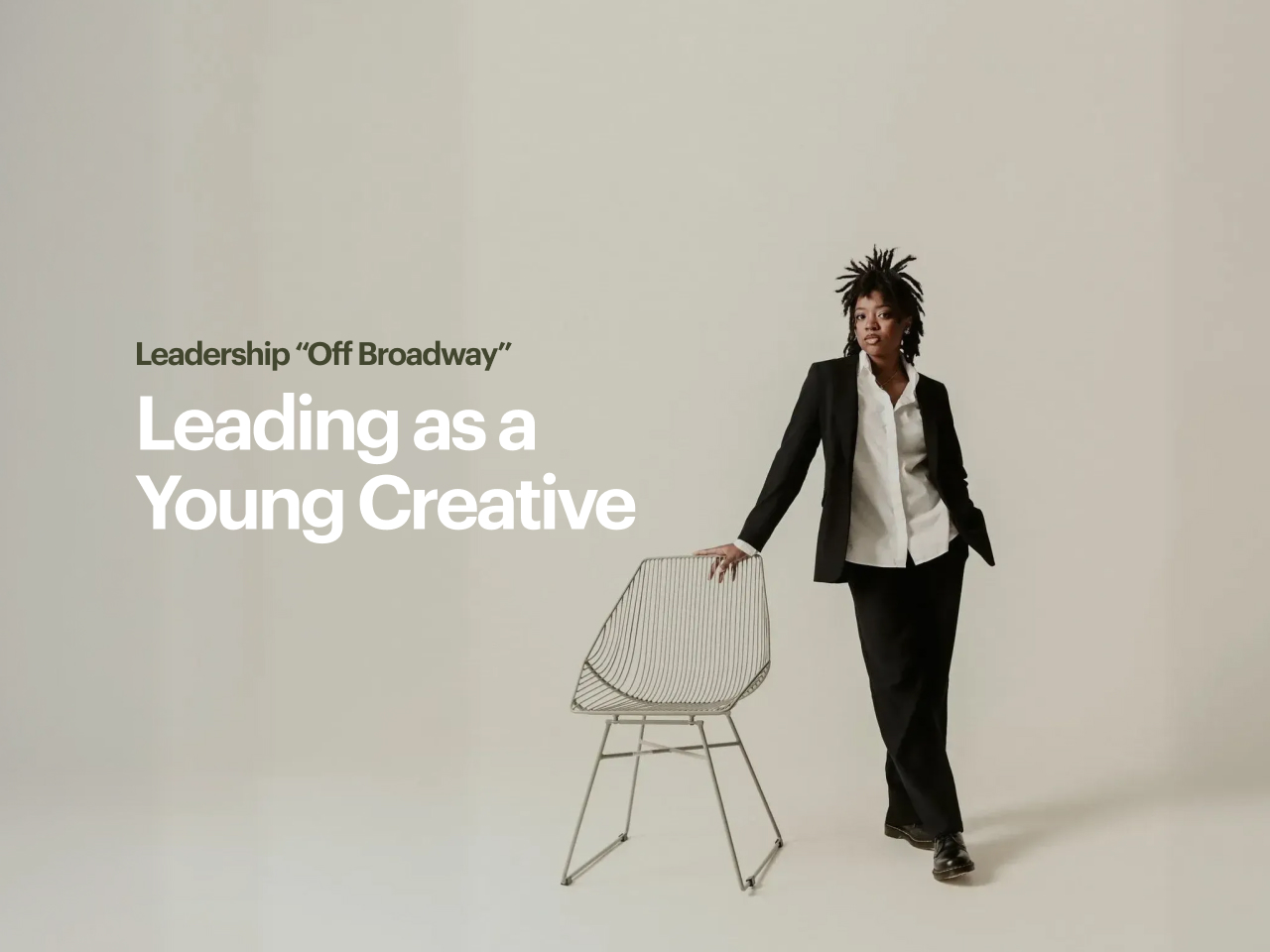
Leading "Off Broadway"

February 11, 2026
Recently, I got to chat with Ella, a small studio team member, about our creative journey - our goals, obstacles faced, and her path to becoming a Creative Director. Through our conversation, a resounding theme emerged - leadership in the industry as young creatives.
From having the willingness to care for your team no matter what, to setting an atmosphere that creates trust, growth, and authenticity – we found that qualities were a key indicator of successful leadership, beyond our skills or even a title.
Many of us, I'm sure, aspire to be leaders in our respective creative industries and agencies - Art Directors, Creative Directors, VP’s, SGD’s, or even CEO of our own agencies one day. However, the fact remains: if (when) the pressure’s on – deadlines are tight, budget issues arise, internal conflict occurs amongst the team – how will you handle these situations? What kind of leader do you aspire to be?
What does it mean, or even look like, to be a leader as a young creative?
There are many facets to it; however, I’ve found that there are four things that directly impact my capability to lead as a creative.
Always Ask the Question
One of my personal strengths (or nuisances) over the years is curiosity – always asking questions. Whether for insight or clarity from peers and supervisors, or asking questions that challenge the status quo on the basis of seeking genuine understanding; I’m almost always asking a question. Whether it be for assistance, feedback, or a referral for work opportunities – always ask the question.
In a freelance or consulting context, asking your client the right questions almost always leads to clarity, stronger concept development, and a sense of confidence in the client to trust you with their brand or business. The same can apply to working in an ad agency or a design studio (like a small studio) – especially as an early-career creative in your field.
After all, asking (intentional) questions is a fundamental skill for active listening, prevents you from making poor assumptions, and is essential to effective problem-solving. It removes barriers to communication, and allows you to share your thought process with relative stakeholders.
Overall, curiosity is a healthy sign of a growth-oriented creative – a trait in which many leaders look for in hiring.
Character Over Talent
Yes, what we do – and how well we execute absolutely matters. But who we are matters so much more. Skill gets us through the door; character keeps you in the room (and ideally, leading the room). Talent (with strong networking skills) can certainly open up opportunities. However, having the right mindset and character, with talent, is what allows you to thrive personally and professionally.
In other words, being talented in your field is the baseline – strong character exceeds it. Besides, no one likes working with a person with a poor character, no matter how talented they are (the egotistical, rude, flaky, apathetic type).
Which is why you should always:
Lead With Humility
While this goes hand in hand with character, I also want to be clear: being humble is not the same as being invisible, a people pleaser, or a doormat for others to walk over (that’s just poor boundaries). Leading with humility – a principle I aim to live by – is genuinely caring about the interests and goals of others, rather than just my own. It’s the willingness to support others for the sake of being supportive – celebrating growth and accomplishments of peers, even as you continue to navigate your own creative career journey.
Leading with humility can look like:
- Owning up to mistakes and correcting/learning from them just as quickly as owning the “wins”.
- Making time out of your day to help out the new intern (and if you’re the intern, supporting fellow peers).
- Embracing constructive feedback and implementing it (keyword here is constructive, not condemning – again, we’re not doormats).
Leading with humility fosters a culture of trust and actual community, not competition – and it’s something you can do, even as an intern, freelance creative, or new creative leader at your company. It creates space for empathy, understanding, and the freedom to actually grow as a team.
And finally…
Taking Ownership of your Creative Journey
If you’re in the catch-22 of “I need experience to get experience” – then I’m sure you’ve heard by now that the best way to do so in this industry is to create experience.
Rather than just freelancing or creating passion projects, document them. Your thought process, how you developed the case study, and the “why” behind the project. Document all of it thoroughly. In doing so, you can demonstrate how you think as a leader and your ability to communicate ideas.
From there, ask for feedback from trusted peers, supervisors or industry leaders (that you have a connection with) - or even attend a portfolio review hosted by creative leaders in your industry (remember, always ask questions).
Practical example: For early-career creatives, try simulating your own agency. I’m not saying to register your own business – but rather work with peers and put together campaigns, test shoots, product rollouts – whatever you aim to achieve (and get paid for later on).
The path to career growth and success (while different for everyone) is difficult to do alone. Build community wherever you are, learn from one another, and continue forward from there.
It’s tough out here in all the creative industries – but it doesn’t mean it’s impossible to lead with what you have from where you are in your journey. Be it as an intern, junior creative, freelancer, or someone pivoting into the industry.
Start today.