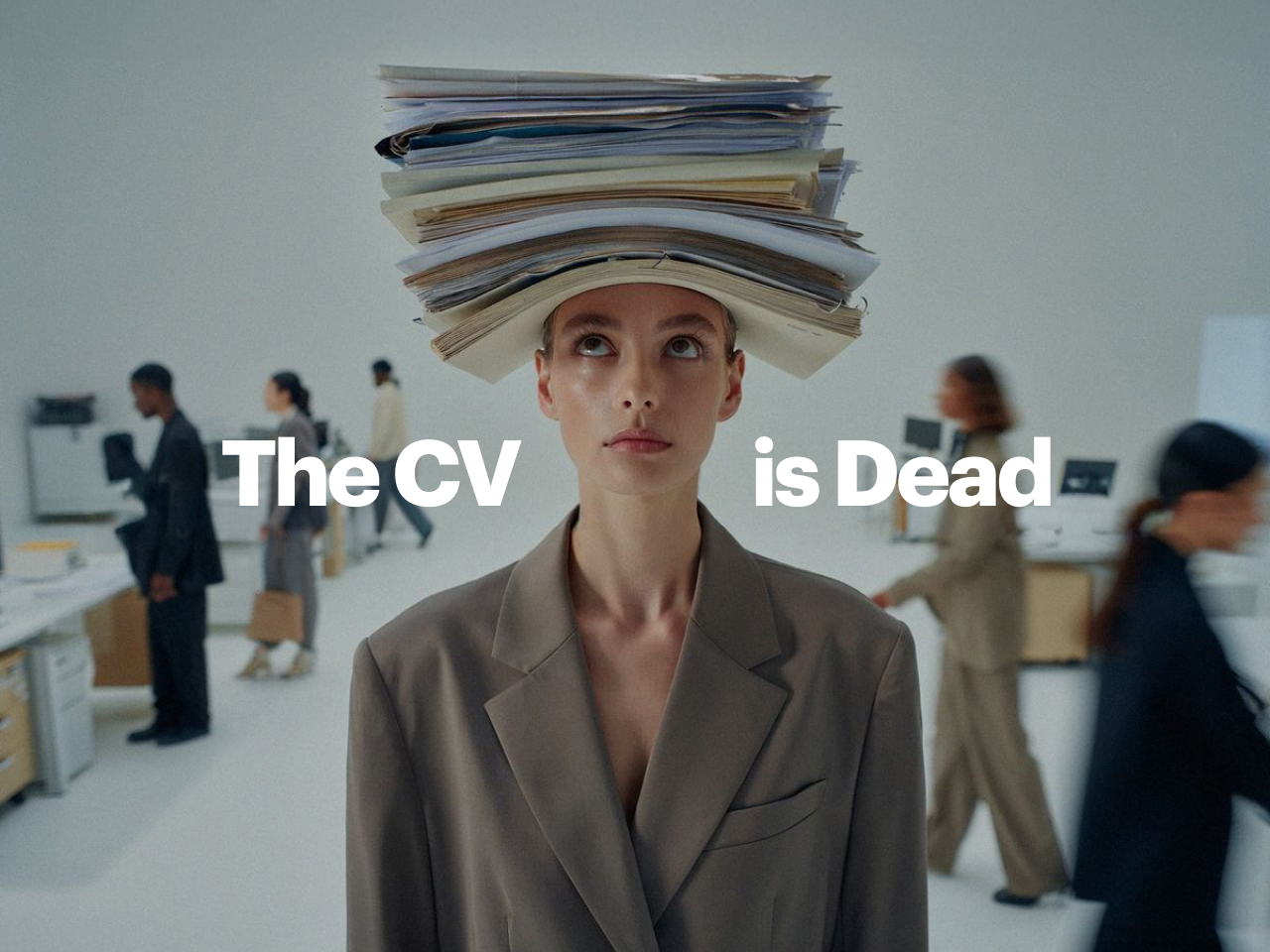
The CV is Dead

January 21, 2026
In 1482, Leonardo da Vinci sat down to write what many historians now recognize as one of the first CVs on record. He didn’t go with a list of his previous employers. Neither was it a templated summary of his "core competencies." It was a letter to the Duke of Milan, meticulously structured around ten specific things Leonardo could do that nobody else could. He could design portable bridges for armies. He could construct bombards and mortars, redirect rivers during sieges. The letter was bold, specific, and unapologetically about what made him singular.
Five centuries later, we've taken that foundational idea and turned it into a game of who can sound the most pleasant while saying the least about themselves.
And nowhere is this more visible than in our inbox.
What happens when we post a role
We open a position at a small studio (the next generation creative studio running Ding!), and the inbox detonates. We're not talking about 50 applications or even 200. We regularly see close to 1,000 applicants for a single role we're trying to fill.
One thousand people. All incredibly smart, talented, and clearly trying.
And somehow, despite the variance in their backgrounds, cities, educations, and ambitions, many blur into beige.
It’s the familiar "passionate about problem-solving" energy that could belong to anyone and therefore belongs to no one. That carefully optimized tone that reads less like a person and more like what a machine thinks enthusiasm should sound like.
I don't blame anyone for this. The market is genuinely brutal right now. When the floor feels like it's tilting beneath you, you grab onto whatever seems stable. Templates. Proven formats. Tools that promise to make you presentable, professional, and hireable.
The quiet tragedy is that presentable has become invisible.
What once signaled professionalism now just confirms you showed up. You followed the rules. You used spellcheck. Congratulations! You've qualified for the qualifier. You've made it into the stack of 999 other people who also qualified.
When everyone sounds like everyone
AI didn't break the CV. It just made the patterns we were already living with uncomfortably obvious.
When everyone uses the same optimization tools, the outputs look similar, and collapse into each other. The CV becomes a game of fill-in-the-blanks, where the blanks were already filled in by someone else's algorithm.
There's a particular kind of loss that happens here. The work is often legitimately strong, but the problem is that the presentation actively hides the person behind it. No opinion or specificity. No sense of what this person gravitates toward when there's no rubric telling them what to care about.
And that matters. Because in creative work, judgment is the deliverable. Your taste is the output. Knowing when to push and when to shut up is half the brief. If none of that shows up in how you present yourself, we're left wondering: where did you go?
Studies now indicate that up to 65% of candidates use AI tools to write their CVs and cover letters. When two-thirds of applicants are outsourcing their voice to the same handful of language models, the result isn't just bland. It's indistinguishable.
One platform people seem to be ignoring
Vizzy is one tool that keeps changing the texture of any application the moment it lands in our inbox.
Not because it's flashy or because it's trying to gamify your professional identity. But because it treats the CV like what it actually should be:
a space you designed, not a document you filled out because LinkedIn told you to.
When such a profile comes through, it feels considered. You can tell someone made choices about what to foreground, what to leave breathing, and how they want to be seen.
The platform lets you add video, images, PDFs, and web links. Profiles include multimedia content, psychometric assessments, and modules that highlight interests, values, and ambitions, not just a chronological list of jobs and degrees. It's a 360-degree view of a person, which sounds like marketing speak until you actually click through one and realize how much more information you're getting.
Two things register almost immediately:
- This person made a choice about how to present themselves.
- This person knows how they want to be seen.
That combination shouldn't be rare. But in a stack of 1,000 applications, it absolutely is.
What it does particularly well is create space for the qualities that traditional CVs are structurally incapable of capturing. The platform is designed to surface qualities that traditional CVs miss, especially for early-career talent or those from non-traditional backgrounds. You can demonstrate soft skills, cultural fit, and motivation in ways that feel genuine rather than performed.
A quiet challenge before you hit send
If you're applying for creative roles and your CV looks exactly like everyone else's, sit with one slightly uncomfortable question.
If this landed in a stack of 1,000 applications, would I recognize it as mine?
Not because your name is at the top, but because of the choices baked into it. The things you decided to show, and the voice you decided to use.
You don't need to rebuild your entire personal brand, and you don't need motion graphics or clever gimmicks. You just need one clear decision that says: this is me, on purpose.
Leonardo da Vinci didn't get hired by the Duke of Milan because his letter looked like everyone else's. He got hired because his letter made it impossible to mistake him for anyone else.
Make sure they see you.