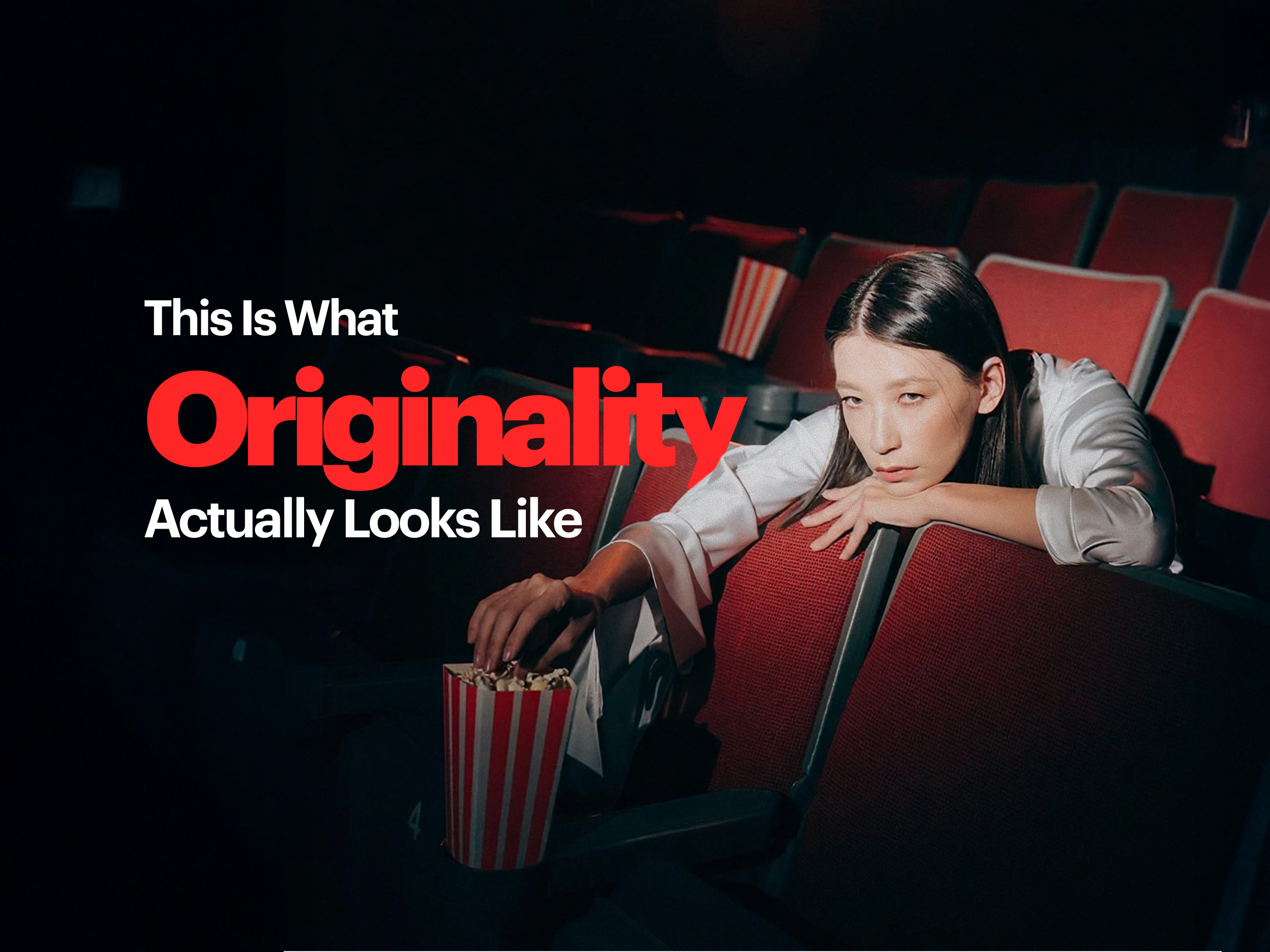
What Originality Actually Looks Like
September 24, 2025
Originality is somewhat of a misnomer.
Inevitably, we will create something influenced by something else. It’s an unrealistic goal to create what’s never been done before.
But originality is subjective.
Using movies as an example, I argue that we love stories and experiences that feel fresh. A movie can be original if it takes risks, deviates from the norm or even alters the focus of a previously explored premise.
Take a movie I recently saw: The Roses (2025), based on a novel called “The War of the Roses” by Warren Adler.
The trailer drew me in because Olivia Colman and Benedict Cumberbatch, two one-of-a-kind actors, play characters battling in a crumbling marriage. With little additional knowledge, I ended up enjoying it for its witty dialogue and gradual descent from love to bitter resentment.
What a wonderful, original movie, I thought after the screen faded to black.
Then, I told my parents they should see the movie, that they’d find it funny. My mom says she wants to, and that they had seen a movie in the ’80s called *The War of the Roses.*
What? This is a remake?! I was baffled and annoyed, wondering if anything in the theater is original anymore.
Since the pandemic, businesses have tightened their grip on nostalgia marketing. Now, it seems that sequels, reboots and spinoffs with the same tropes and characters have overwhelmed the media playing field:
- Tron: Ares
- Dune (2021)
- Mean Girls (2024)
- Alien: Romulus
- How to Train Your Dragon (2025)
- a Harry Potter TV series in 2027
The list unfortunately goes on and on.
These are the culprits, the clear money grabs. Jurassic World: Rebirth, for example, has made well over $800 million worldwide as of writing this article. Although the movie had a somewhat original plot, the storytelling was so derivative that it felt like a crude skeleton made from the fossils of Jurassic Park (1993), to which fans have an irreplaceable emotional attachment.
We need stories told in a way that make us feel and think about the world differently. It’s how conversations open, how inspiration is born. It’s also just more entertaining when your thoughts are provoked.
In my mind, The Roses achieved originality with its quick-witted dialogue, convincing performances and updated elements for the 21st century. The original story is still relevant, but today’s humor is different, women are now more independent and divorce rates are down.
Above all, I left the theater thinking a lot about the film choices and the conflict of career ambition and love. While I haven’t had a chance to read the book or watch the 1989 adaption, it’s clear this movie wasn’t made with nostalgia or profits in mind.
Original storytelling isn’t always just about writing, either. Sometimes movies can carry a plot and evoke emotion with things like character design, emotional performances or an intricate setting.
James Cameron demonstrated this with the Avatar movies, despite the story of colonizers uprooting an indigenous civilization having been done before. He uses astounding motion capture technology and whimsical music to live in the original CGI-designed world of Pandora.
Tell true stories, tell them differently. Or tell them similarly and give us something new.
Stories aren’t like brands of ibuprofen. You can consume as many as you want and experience something new each time.
Each of us has a unique concoction of backgrounds and life experiences. Filmmakers and other storytellers need to bring that to the table—not a fresh coat of paint on existing intellectual property every 20 years or so.
You have a much better chance of being authentic—being original—by telling a story in your vision, in a way that’s important to you.