Backlash is now a line item

August 5, 2026
American Eagle took a year of controversy, looked at the sales data, and re-signed the same face.
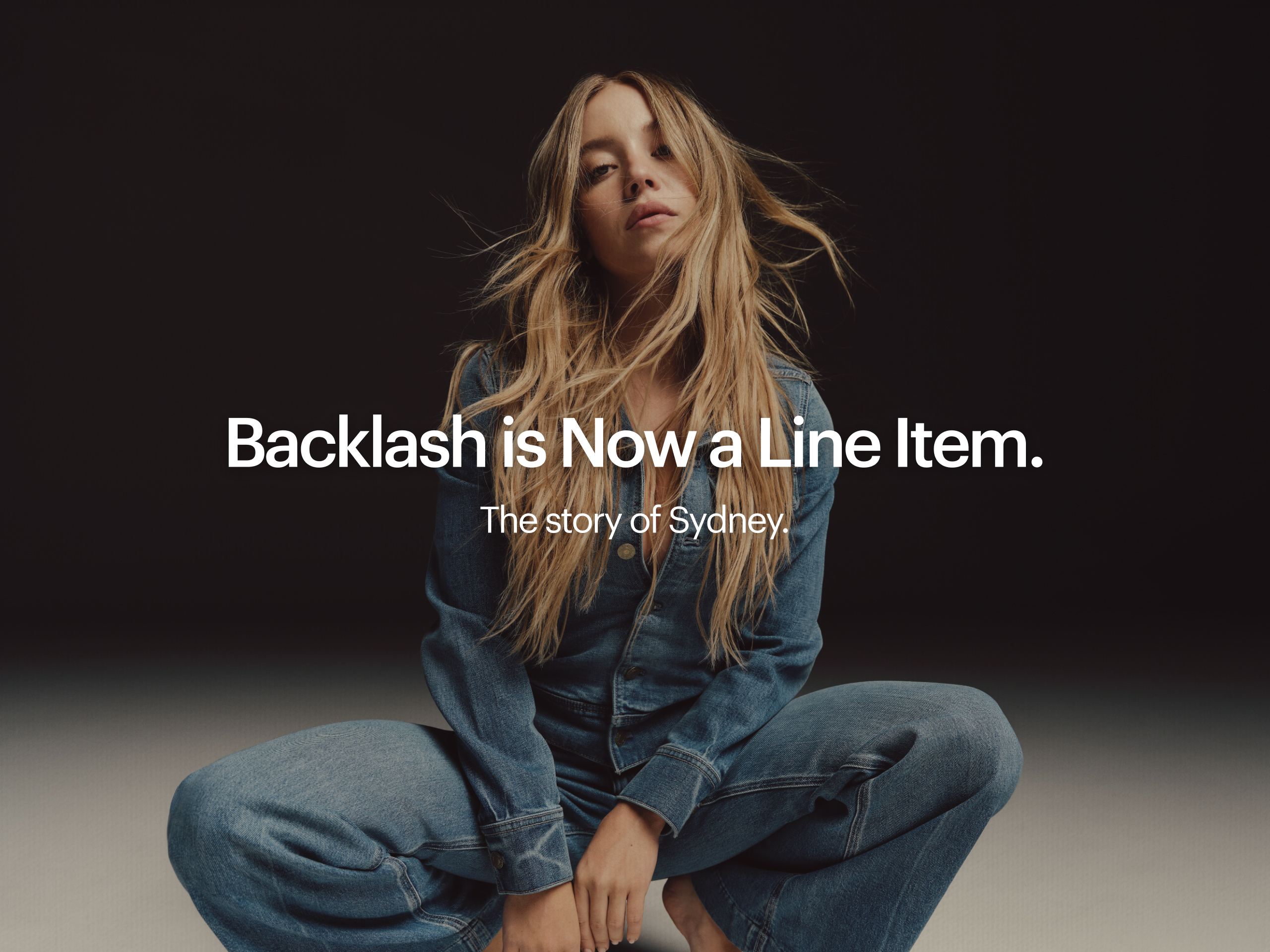
In July 2025, American Eagle released a denim campaign built on a pun. Sydney Sweeney Has Great Jeans. Within days, the wordplay had been read as everything from a harmless dad joke to eugenics dog whistle, politicians on both sides had weighed in, and the campaign became the loudest brand controversy of the year.
We all know the playbook for what happens next, because we watched brands run it for a decade. The apology drops within 48 hours. The campaign disappears. A statement about listening and learning appears, written by a committee and read by no one.
American Eagle did none of it. The brand posted a statement of exactly one sentence's worth of doctrine, "'Sydney Sweeney Has Great Jeans' is and always was about the jeans," and let the work ride.
Then the numbers came in. Customer counts rose by 700,000 over the summer. Revenue turned positive in the third quarter after two down quarters. Comparable sales rose 2 percent in the holiday quarter. And in 2026, rather than retiring the partnership with a sigh of relief, American Eagle renewed it, launching a new Sweeney summer campaign alongside a country music tie-up with Ella Langley.
The brand's CMO summarized the philosophy in five words: "comment sections are not customers."
Really radical approach, considering the hall of fame it breaks from. Gap unveiled a new logo in 2010 and reversed it in under a week after the internet revolted. Tropicana redesigned its carton in 2009, watched sales fall by roughly 20 percent in less than two months, and crawled back to the orange with the straw in it. Pepsi pulled its Kendall Jenner protest ad within about a day of launch.
Bud Light's 2023 backlash cost it the best-selling beer crown it had held for two decades. And just last year, Cracker Barrel stripped the old timer off its logo, watched its stock shed value while its actual customers staged an intervention, and restored him within days.
We covered that one in a previous Ding, and our diagnosis holds: the people eating biscuits at your restaurant were never asking for minimalism.
What makes the American Eagle case more than just one brand being stubborn is that every U-turn on that list shares a trait: the backlash came from the brand's own customers. Gap's shoppers hated the logo. Tropicana's buyers could not find their juice. Cracker Barrel's regulars felt robbed. The noise and the revenue pointed the same direction, so reversing was not cowardice. It was listening.
American Eagle faced something different. The discourse was deafening, but the purchase data pointed the other way. The people speaking were, in large part, not the people buying, and the brand had the social listening infrastructure to know the difference. One brand consultant’s summation was that risk has stopped functioning as a cultural barometer because,
in the current environment, something detonates every single day. When outrage is ambient, outrage stops being information.
So backlash has been repriced. It has moved from the crisis column to the cost column, budgeted like shipping or shrinkage. And that forces a question we find far more interesting than the controversy itself: if outrage no longer kills campaigns, what should?
Our answer is conviction. A brand that knows precisely who it serves can hold a position through a storm, because the storm was never its audience. A brand chasing provocation for reach is doing something that merely looks similar, the way a gambler looks similar to an investor from across the room.
And a genuinely dark version of this is coming: once marketers internalize that backlash is survivable, some will start engineering it on purpose. Audiences can smell manufactured controversy faster than agencies think, and the brands that try it will discover that cynicism, unlike outrage, does not blow over.
So, before you greenlight the risky idea, ask the only question that matters now.
Are you holding a conviction, or renting one? Your customers can tell. Eventually, so will your quarterly numbers.