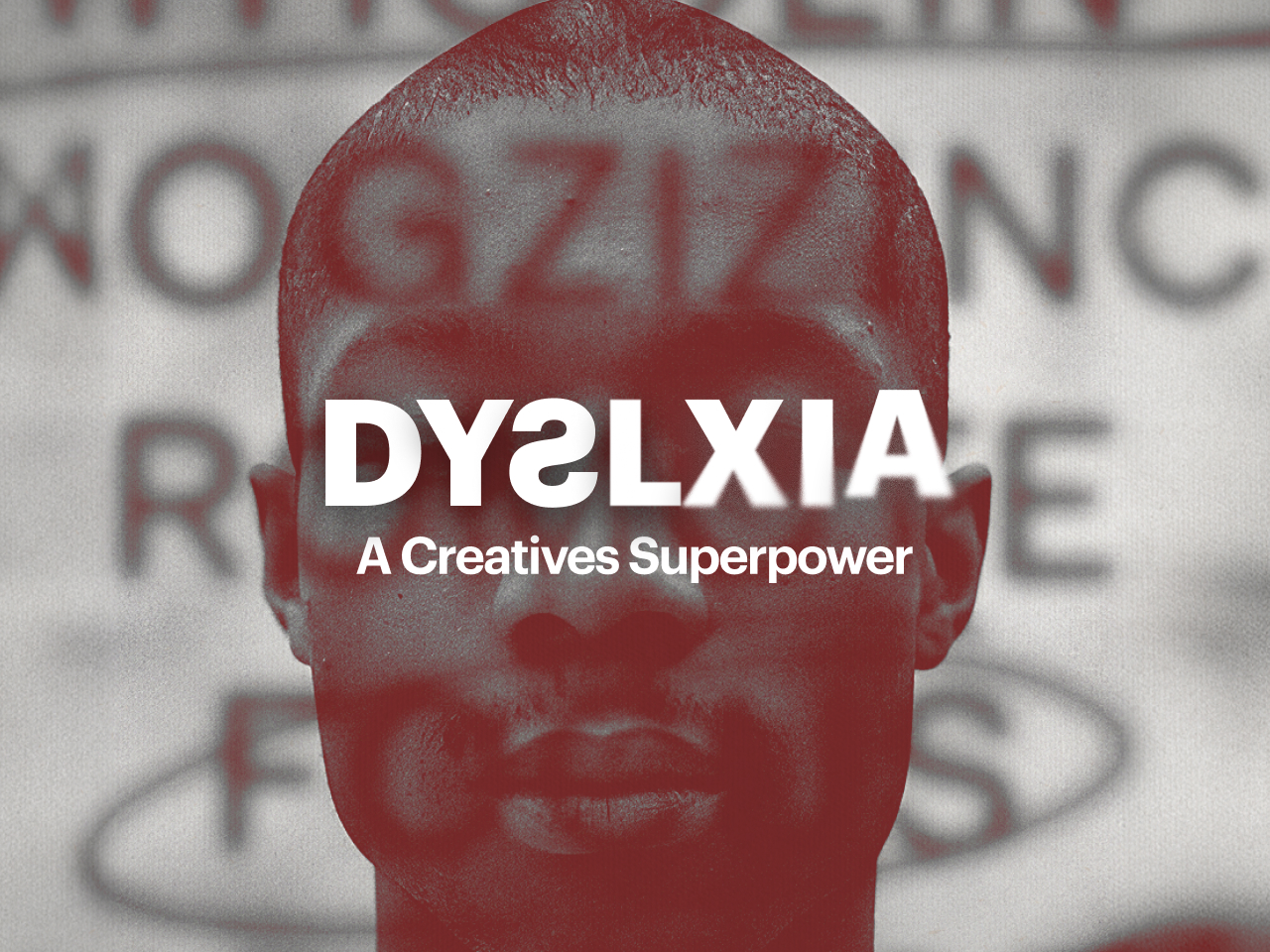
Dyslexia
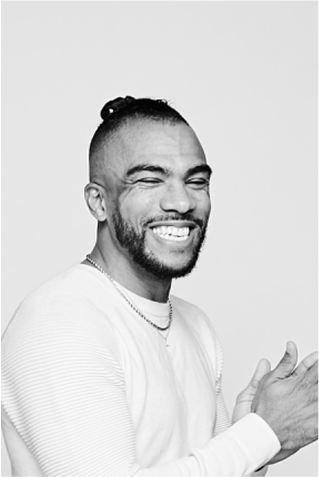
January 7, 2026
I am facilitating a workshop with the leadership team of a Fortune 500 company.
The room is focused and quiet. We are mid-exercise, and my job is simple. Listen and write what they say on the whiteboard.
This is the part where I usually start to sweat.
Not because I am nervous. I have done this countless times. I know how to lead a room. I know how to guide conversations toward clarity.
I sweat because I am dyslexic.
Eventually, someone says a word I know I am not going to spell correctly. No chance. I pause, then do what I always do. Marker to board. Letters in roughly the right order. Close enough.
I am 37 years old, standing in front of some of the most powerful decision makers in the country, and I still cannot spell some of the simplest words.
That is okay.
We invented erasers for a reason.
Growing up, I was always the last one to finish reading out loud. On standardized tests, time was never on my side. The first and only F I ever received was in spelling.
Reading and spelling were constant friction. Math and science felt intuitive. That contrast is what landed me in architecture school. If it had not, I probably would not have taken the hardest possible path to getting an education.
I earned two master’s degrees barely. Endless all-nighters. Flash cards. Friends who took notes for me because I could not listen and write at the same time.
On paper, I was a mess. Everywhere else, I thrived.
I could read rooms instantly. Feel when something was off. Connect ideas others could not see together. I just could not prove it in traditional systems.
It makes sense that I started my own company instead.
For most of my life, I thought dyslexia was something I had to manage. A weakness to work around. That changed when I was finally medicated properly.
The medication did not make me better at details. It removed friction. I stopped dropping balls. And more importantly, I realized something that changed everything.
I do not belong in the weeds.
When you start something from nothing, you have to be in the weeds. But leadership lives above them. Once I had clarity, I could finally do what I do best. Strategy. Direction. Seeing what was coming before it arrived.
What I was told was a weakness turned out to be something else entirely.
Pattern recognition.
At a small studio, we call this identity architecture. Pattern recognition for lived experience. We listen. We reflect. Then we project. Feel before you fill.
Creativity is not output. It is an expression of self.
Recently, I stumbled across a Forbes article on dyslexic thinking. It stopped me in my tracks. Dyslexic thinkers already contribute nearly 200 billion dollars annually to the US economy. With proper support, that number could exceed 650 billion. Globally, trillions in value remain untapped.
Not because dyslexic people lack ability.
Because the systems we built reward sameness.
The research confirms what many of us already know. Dyslexic thinkers excel at big picture thinking, creativity, problem solving, and pattern recognition. These are not soft skills. They are the skills most critical to the future of work.
And that future is already here.
Everyone has access to the same tools, the same technology, the same content. Same inputs. Same outputs.
Difference is no longer optional. It is the advantage.
In 2025, while hiring designers, this became impossible to ignore. Portfolios looked the same. Language was recycled. Trends moved faster than depth. I wrote about this in ding! when reflecting on hiring the next generation of designers.
If you cannot recognize the patterns that set you apart, you will be grouped with the rest.
And once that happens, you become a commodity.
This is where neurodiversity stops being a talking point and becomes a competitive advantage.
Dyslexic thinking is not about doing things the hard way. It is about seeing what others miss. Making leaps instead of steps. Trusting intuition when linear logic fails.
AI can optimize and repeat. It can scale what already exists. What it cannot do is intuit what should exist next.
That work still belongs to humans.
Especially those trained by necessity to think differently.
If you are creating based only on what exists today, you are already behind.
Creativity is intuitive. It guides us toward futures that bring more peace than fear. To do that, you have to trust your intuition, your spirit, your faith.
For me, faith has always been the compass.
Faith is the substance of things hoped for and the evidence of things not yet seen. Hebrews 11:1
Trusting patterns before the picture is complete. That is the dyslexic superpower.
If you operate creatively for a living, I hope this makes you feel dangerous in the best way. Your different way of thinking is not something to hide.
It is likely the thing that opens the next door.
The future does not need more sameness.
It needs people who can see the pattern before the picture is finished.