The Problem with Legacy in Design

February 4, 2026
In the spring of 1983, I somehow set the record at my elementary school in the Presidential Physical Fitness test for most pull-ups. Strangely, I don’t think that record was ever broken before the school closed and the buildings were demolished decades later. And look, there’s no proof anymore anyway, right? Trust me.

That unbroken record—and the vanished building that held it—got me thinking about legacy:
what survives, what disappears, and what still shapes the work.
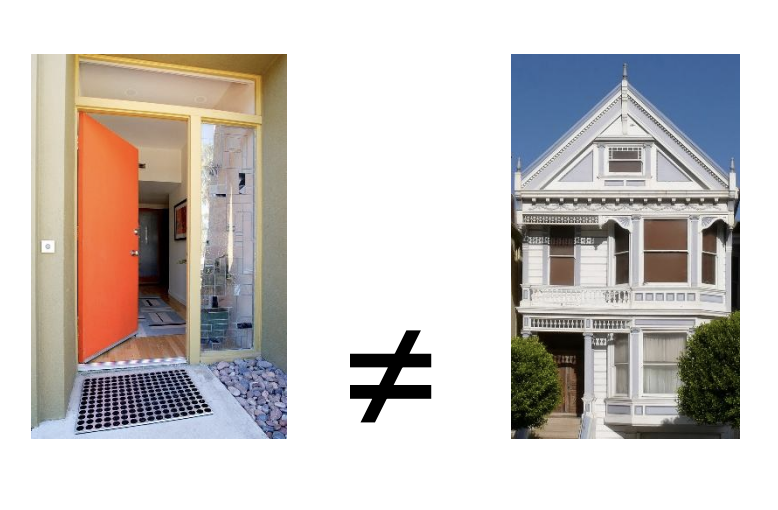
So how does legacy influence our work as designers? Let me illustrate an example. In my work designing custom homes, precedent (our fancy word for architectural legacy) plays a huge role in our design process. For instance, if a client asks for a mid-century modern home, my design solution will not be coming with drippings of Victorian wainscot and 3-piece crown mold.
Why does legacy have so much to say? Because legacy trails after us like an impossible to ignore tail on a crocodile. If you’re designing inside a brand, studio, product line, aesthetic, or even a genre, you already have a tail—whether you asked for it or not.

Legacy is a Tail
Tails are great at their best—providing guidance and stability – even power and thrust in the right setting. At their worst they become a hindrance, slowing movement and stifling progress. Think of the example of our friendly crocodile…in the water, that tail is power. But on land? All it does is drag through the mud.
So here’s the crux of this whole conversation…how do we as designers do our work when we have a tail of legacy attached? I’ve seen terrible examples where ‘the legacy’ is the be-all, end all. There is a resistance to growth and change in favor of the safety of what has worked. Psychologists call it rosy retrospection: we remember the past better than it was. Unfortunately, this posture begets a slow slide to irrelevance.
→ Enter stage left: The Tail Wagging the Dog.
I’ll protect the guilty here and not call them out. We went to a ‘beloved holiday show’ recently that felt frozen in time—legacy on full display, evolution nowhere in sight. That’s the danger: the tail doesn’t guide the work anymore. It governs it.
But what might legacy as a positive force look like? Where legacy is fully acknowledged, fully known and accepted with respect…and held more with curiosity at what it can teach us than with clenched fists as something that cannot be lost.
Enter stage right: The Dog Wagging the Tail ←
There are incredible examples where legacy inspires innovation. One such example I saw is the recent rebrand of Apple TV where the work nods to its history while updating the expression.
Even a recent Ding! gave a shout out to Dr. Pepper being intentional about how they are moving forward in the context of their legacy brand, protecting their story while letting new voices tell it.
A quick insight into a legacy design problem I’m working through right now. We are renaming our company – and legacy is at the heart of the work – all 40+ years of it. And we’re not viewing our legacy as a constraint, but as an expert guide. It is steering us to what is most important: respecting our history while charting a course toward great design and better listening.
So all this thinking about legacy has helped me clarify some ideas about practical steps to share to keep the tail on its best behavior…because, look, nobody wants our tail knocking over drinks at the party.
Firstly, learn everything you can about the legacy at play. Where did it come from? When did it start? How did it grow? What kept it from fading? What are the cultural, political and social norms that have influenced it? Like a scientist in a lab, put the legacy under a microscope and give it a thorough and complete examination. Make hypotheses. Test them. Never assume you know the whole story.
Even as I’ve lived the last 25 years of our firm’s 43-year legacy, I still needed to do this work. In fact I recently sat down with our Founder, now retired, to talk about our legacy. He reminded me a huge part of our legacy has been listening intently to our clients. Indeed, I needed to hear that. So firstly, get a full understanding.
Secondly, seek to understand the influence the legacy has RIGHT NOW. Does legacy have a strangle hold? Is it in its proper place as guide? Think of the legacy in your design problem and ask what position it is in. I would suggest legacy as sage is the healthiest proposition.
Sages care about the health of the tribe and they hold the cultural story of the people. A healthy brand legacy is much like that. Yet it is the chief who decides. So secondly, seek the wisdom of the sage, but design with the authority of the chief.
Thirdly, refuse to let the tail wag the dog. No matter how strong a legacy is, it can still grow and develop, and in fact, it must. Biology teaches us that living things must do this to survive.
There’s an architectural hardware company that we often work with, Chown Hardware that is a family held business now in their 5th generation of ownership. What they are today is not what they were 30 years ago. What they were 30 years ago was not what they were 60 years ago. Rinse repeat all the way back to the beginning of their 140 year history. They have thrived through the legacy of their family because they have allowed it to grow and change. So thirdly, be the dog and wag your tail. Everyone loves a happy dog!
Well…except when a wagging tail is knocking over drinks at a party… Sit, legacy. Sit! I’ll leave you with this.
The future deserves our best work. Designing with a tail means accepting its weight, understanding its purpose, and then—deliberately—choosing to beguided forward.
For more from Eric, Click here!